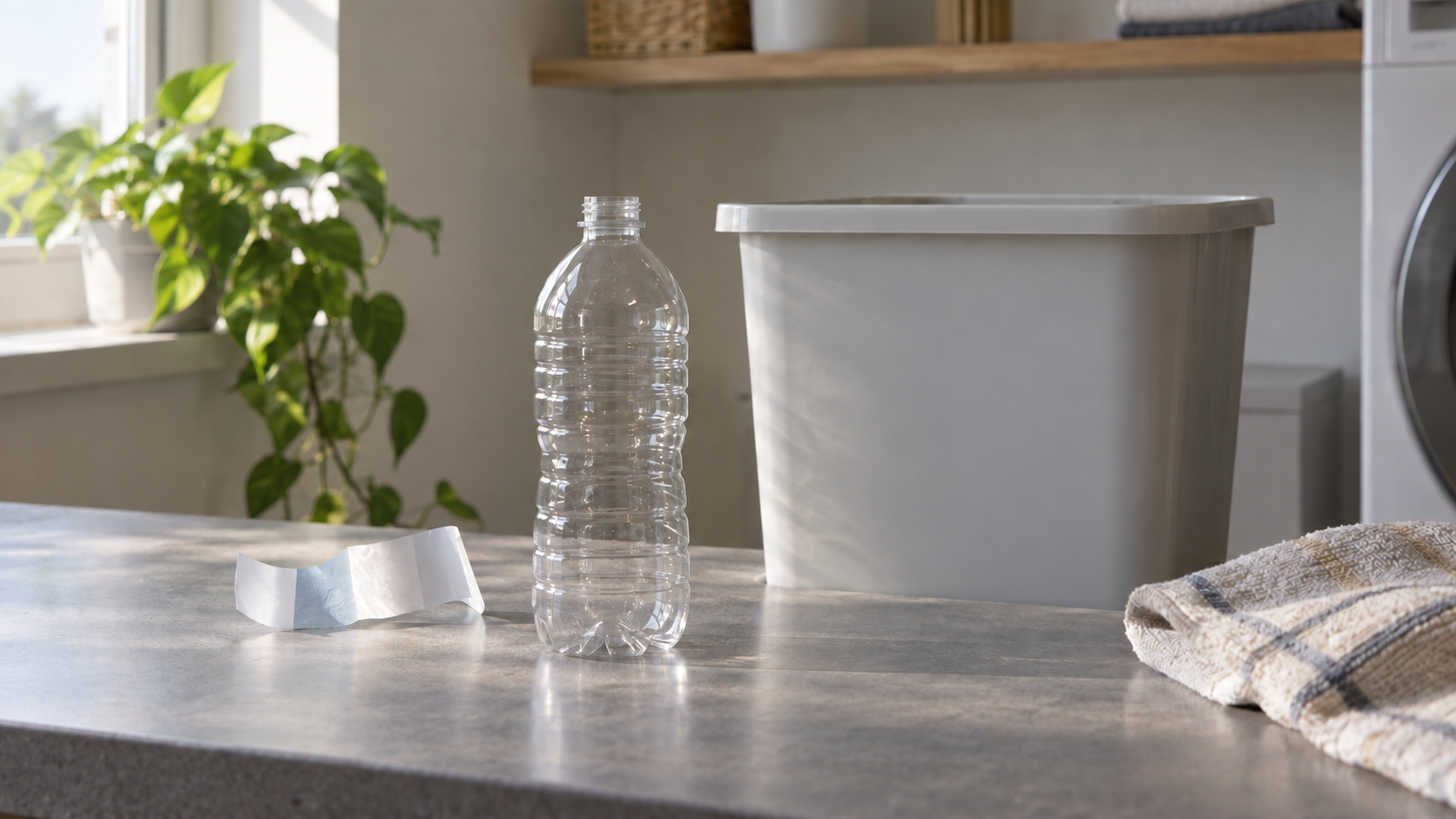
The recycling corner in a Seoul apartment can look like a row of color-coded chores. The strange part is the clear bottle sitting in its own section, away from other plastic. It’s not there because clear things are automatically better. It’s there because the city is trying to keep one predictable material stream clean enough to use again.
That is the useful way to read tumyeong petbyeong (투명 페트병, “clear PET bottle”). The instruction is less about visual neatness than about protecting a known type of bottle from a mixed pile of containers.
The bottle is separated before it becomes “plastic”
Seoul’s public guidance describes a specific path for clear beverage and bottled-water PET bottles. In apartment complexes, they go into a dedicated clear-PET collection container rather than the general plastic bin. A colored PET bottle stays with plastic. The distinction isn’t “anything transparent”; the guidance warns that clear-looking trays and other plastic containers shouldn’t be added to the beverage-bottle stream.
That detail matters because a recycling symbol isn’t a promise that every item belongs in the same collection stream. Seoul’s guidance names beverage and bottled-water PET bottles for this route while keeping clear-looking trays and other plastic containers out. The bin is therefore a material boundary established before collection, not a simple test of whether an object looks transparent.
The Korean phrase bunri-baechul (분리배출, “separate disposal”) sounds like a sorting instruction, but here it is also a decision about what kind of material the next process receives. I find that more useful than memorizing the bin’s color.
Empty, rinse, remove, compress
The preparation sequence is ordinary, but each step has a reason. Seoul’s Q&A says to empty the bottle, rinse away residue, remove the label, compress the bottle, and put the cap back on. The cap doesn’t need to be left loose: the guidance explains that the cap and its ring are separated during recycling, while keeping the cap on reduces the chance that new dirt enters the bottle.
The label is the obvious thing to forget. It’s also the part that changes the instruction: once removed, the label goes with plastic film rather than staying on the bottle. The city’s explanation isn’t asking residents to make a laboratory judgment. It’s asking them to reduce the number of materials attached to the bottle before the bottle enters a stream designed for a narrow material range.
The useful final check is procedural, not a timed test: the bottle should be empty, rinsed, label-free, compressed, and closed as Seoul’s guidance specifies. A bottle that still contains a drink or keeps its label isn’t ready simply because it’s clear.
The cap isn’t the confusing exception
The cap can feel like a different plastic object. Seoul’s guidance gives a practical instruction: close it before disposal. That instruction belongs to the same preparation sequence as emptying, rinsing, removing the label, and compressing the bottle; it does not turn the cap and bottle into one material.
That’s a small but useful distinction. “Keep it attached” doesn’t mean “the materials are identical.” It means the collection and sorting process is designed to handle the pair after the bottle has been emptied and cleaned.
The address changes the container, not the material
Seoul’s instructions distinguish apartment complexes from detached houses. Apartments use a dedicated collection container. For detached houses, the guidance describes putting clear PET bottles in a bag by themselves, according to the local collection arrangement. The preparation rule stays recognizable, but the place where the bottle is handed over changes.
That is why a screenshot from one neighborhood is not a universal disposal calendar. The material rule can be shared while the day, bag, or collection point is administered locally. The Seoul Q&A explicitly tells residents to check their district for the exact day when schedules differ.
What the mark can and cannot tell you
The Korea Environment Corporation explains the separation-disposal mark system as a way to make packaging materials and disposal methods easier to identify. Its guidance covers how the mark is printed or labeled, where it can appear, and how multi-part packaging may need separate marks. The mark is information for sorting; it isn’t a guarantee that an item belongs in the clear-PET container.
That matters when a package arrives as a small bundle of materials. A bottle may have a cap, a label, and a body that can be separated, so the mark system can put information on each detachable part rather than pretending the whole package is one substance. The mark tells you what the package maker has identified; it doesn’t erase the collection instructions at your address. A resident still has to ask two different questions: what is this material, and where does this local service want it placed? The first question is printed on the package. The second must be answered from the collection instruction for the building or district where the bottle is discarded.
That is the boundary worth remembering. Read the mark, identify the bottle type, and follow the local collection instruction. Do not reverse the logic and decide that anything with a triangle, or anything transparent, belongs in the same bin.
The bottle’s last trip is short: empty it, rinse it, remove the label, flatten it, close the cap, and place it where the local system asks. The clear plastic is only the beginning of the decision.