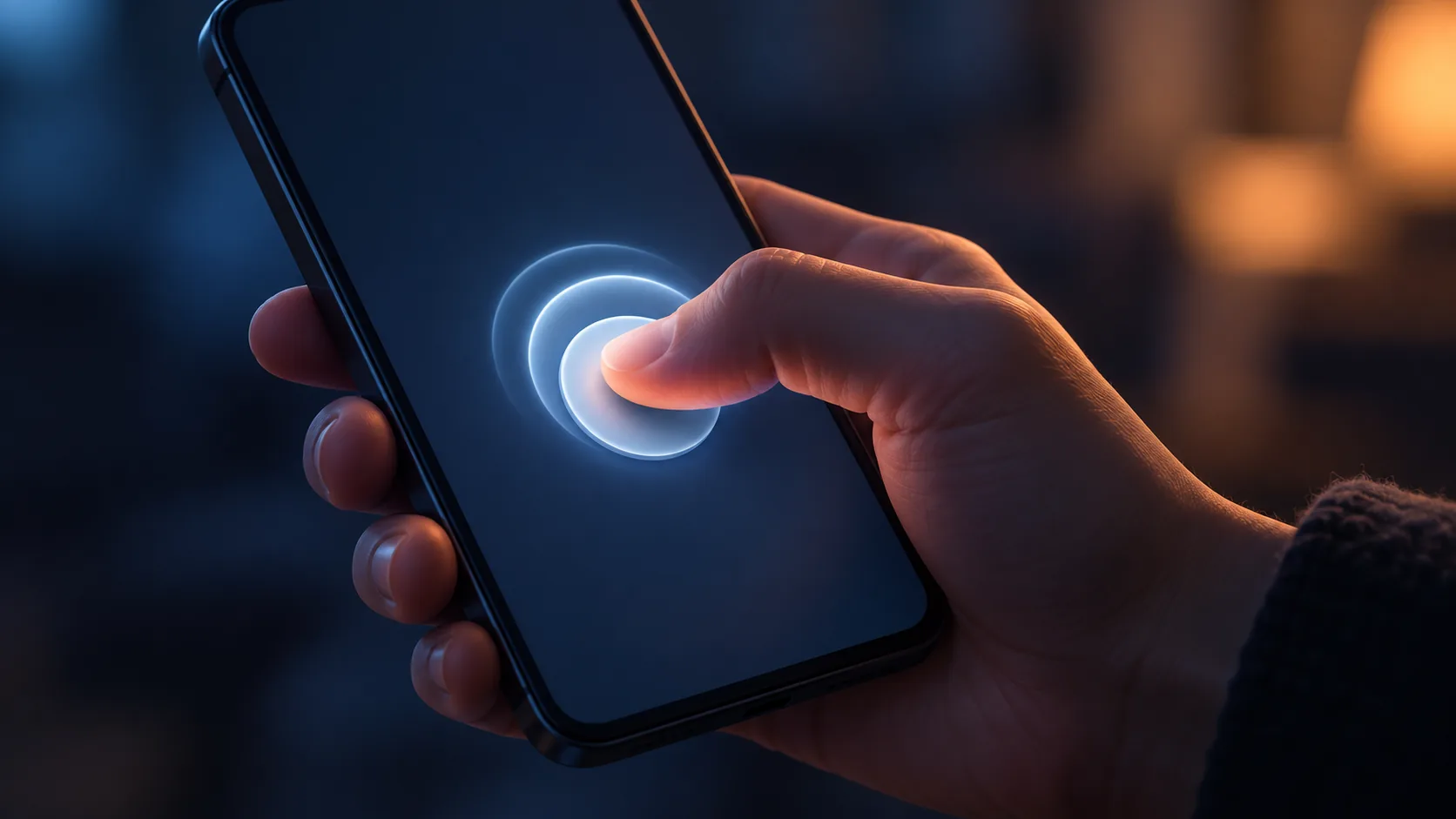
If you call 112 in Korea and cannot speak safely, don’t assume that silence alone explains the danger. Stay connected and follow the operator’s prompt. Pressing a number key twice produces the two tones Korean police publicized as a silent distress signal.
The taps are only the first signal. Police can then send a text link to the Visible 112 service; opening that link and agreeing to the requested use of personal and location information enables location sharing, live video, and private chat. The keypad tones themselves don’t switch on a camera or silently transmit all of that data.
Why the signal is called “knock knock”
The campaign calls the two keypad sounds ttokttok (똑똑, “knock knock”). It turns the familiar sound of knocking on a door into a way to get an operator’s attention without speaking in front of someone nearby.
The official Korean name is mal eomneun 112 singo (말 없는 112 신고, “silent 112 report”). Police had already treated speechless calls as bijeonghyeong singo (비정형 신고, “non-standard reports”), but the 2022 campaign formalized the keypad response and linked it to a second service.
That second service is boineun 112 (보이는 112, “Visible 112”). The distinction between the two names is useful: the first is the silent signal during the call, while the second is the web link that can show police where the caller is and what is happening.
The exact sequence matters
The official KTV demonstration shows the process in this order:
- Call 112 and remain connected.
- When the operator asks whether police help is needed, press a number button twice.
- Police send a text message containing the Visible 112 web address.
- Open the link and agree to the requested personal-data and location-data use.
- The service can then share the caller’s location and live camera view with the control room, while private chat provides a way to communicate without speaking.
This is more precise than the tempting shortcut “tap twice and police can see you.” The Korean source says the operator gives the instruction, the link arrives afterward, and the caller’s consent is part of the handoff. A person who remembers only the two taps may miss the action that actually opens the visual channel.
The phone call and the web link do different jobs
The two keypad tones solve one problem: they tell the operator that the person on the line may need help but cannot explain aloud. They are a deliberately small signal, not a complete report.
The texted link solves the next problem. Korea’s policy briefing says that, after consent, the service supports location confirmation, video transmission, and private chat. Its description also says the phone’s location and camera view can be sent to the control-room operator in real time.
That split is the part worth remembering. The call establishes contact. The tones communicate the constraint. The link creates a quieter information channel. Treating those as one automatic feature makes the process sound simpler than the official instructions.
Two taps are not Korea’s only non-voice option
The current 112 reporting portal, checked on September 28, 2026, separately lists telephone, text, ten-second audio recording, and video reports, plus the 112 reporting app. The silent-call sequence is therefore one route for a particular situation, not a replacement for every other reporting method.
The portal also warns that false reports can be punished under criminal law or the 112 reporting law. The “knock knock” signal is designed for a person who genuinely needs police help and cannot safely say so.
What to remember under pressure
If I had to reduce the Korean instructions to one line, it would be this: call, wait for the prompt, tap twice, then check the police text. Each verb belongs to a different part of the system.
There is one sensible limit to add. No guide can promise how an individual emergency will unfold, and phone access, connectivity, and immediate danger can change what is possible. The reliable claim is narrower: Korean police officially teach the two-button response, and their own demonstration shows the link-and-consent steps that follow it.
Sources checked September 28, 2026: