
Skip to content

K-Munhwa

  • K-Pop
  • K-Drama
  • Language
  • Food
  • Travel
  • Beauty
  • Culture

Korean language

Korean Language 우리말

When Hanbeon (한번) Stops Meaning ‘Once

September 30, 2026 by Jay
Two blank ivory tiles flank a red bead beside a springboard with a small figure preparing to jump

One Korean space separates a literal count from a cue to try something, find an opportunity, or add emphasis.
Categories Korean Language Tags hanbeon, Korean language, spacing Leave a comment
Culture Explained 문화

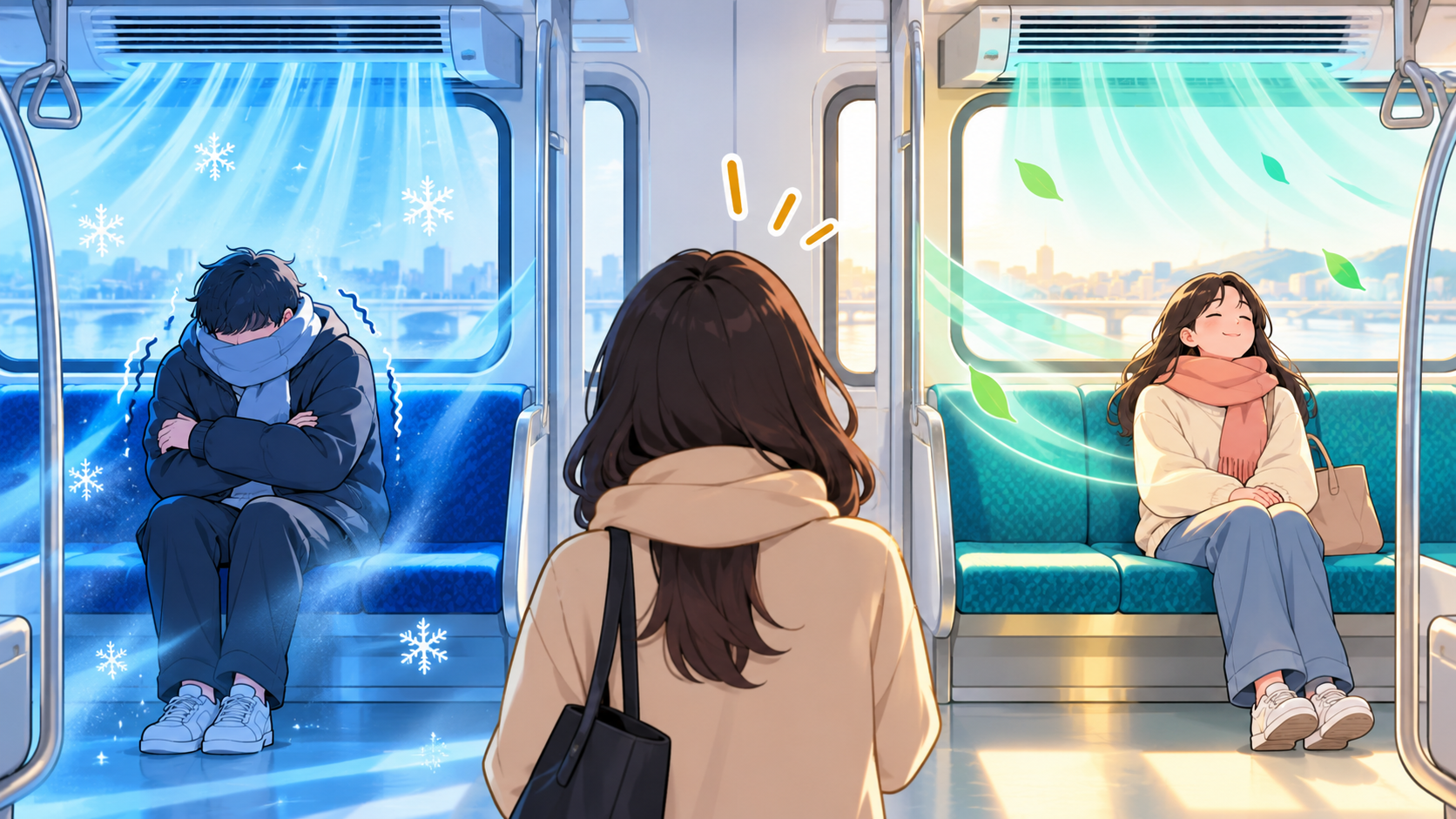
Seoul’s Subway Has Cars Set One Degree Warmer (약냉방칸)

September 26, 2026 by Jay
An illustrated subway interior contrasts stronger icy-blue cooling with gentler teal cooling as a passenger chooses between the cars

The label marks a relative cooling setting, and the right car number changes with the line rather than following one subway-wide rule.

Categories Culture Explained Tags Korean language, public transit, Seoul subway Leave a comment
Korean Language 우리말

Is Gomapseumnida (고맙습니다) Less Polite Than Gamsahamnida?

September 18, 2026September 15, 2026 by Jay
Illustration of an everyday polite thank-you between a customer and a shopkeeper

A shop owner was called rude for saying gomapseumnida. Korea’s own dictionary disagrees, and the politeness actually sits in the verb ending.

Categories Korean Language Tags gamsahamnida, Korean language, politeness, thank you Leave a comment

K-Munhwa

Korean pop culture, explained by a Korean in Seoul. Context you will not get from a translated headline.

Topics

  • Beauty & Fashion
  • Culture Explained
  • Food & Drink
  • K-Drama & Film
  • K-Pop
  • Korean Language
  • Travel & Places

Site

  • About
  • Contact
  • Editorial Policy
  • Privacy Policy
  • Terms of Use
  • About
  • Contact
  • Editorial Policy
  • Privacy Policy
  • Terms of Use
  • © 2026 K-Munhwa • Built with GeneratePress