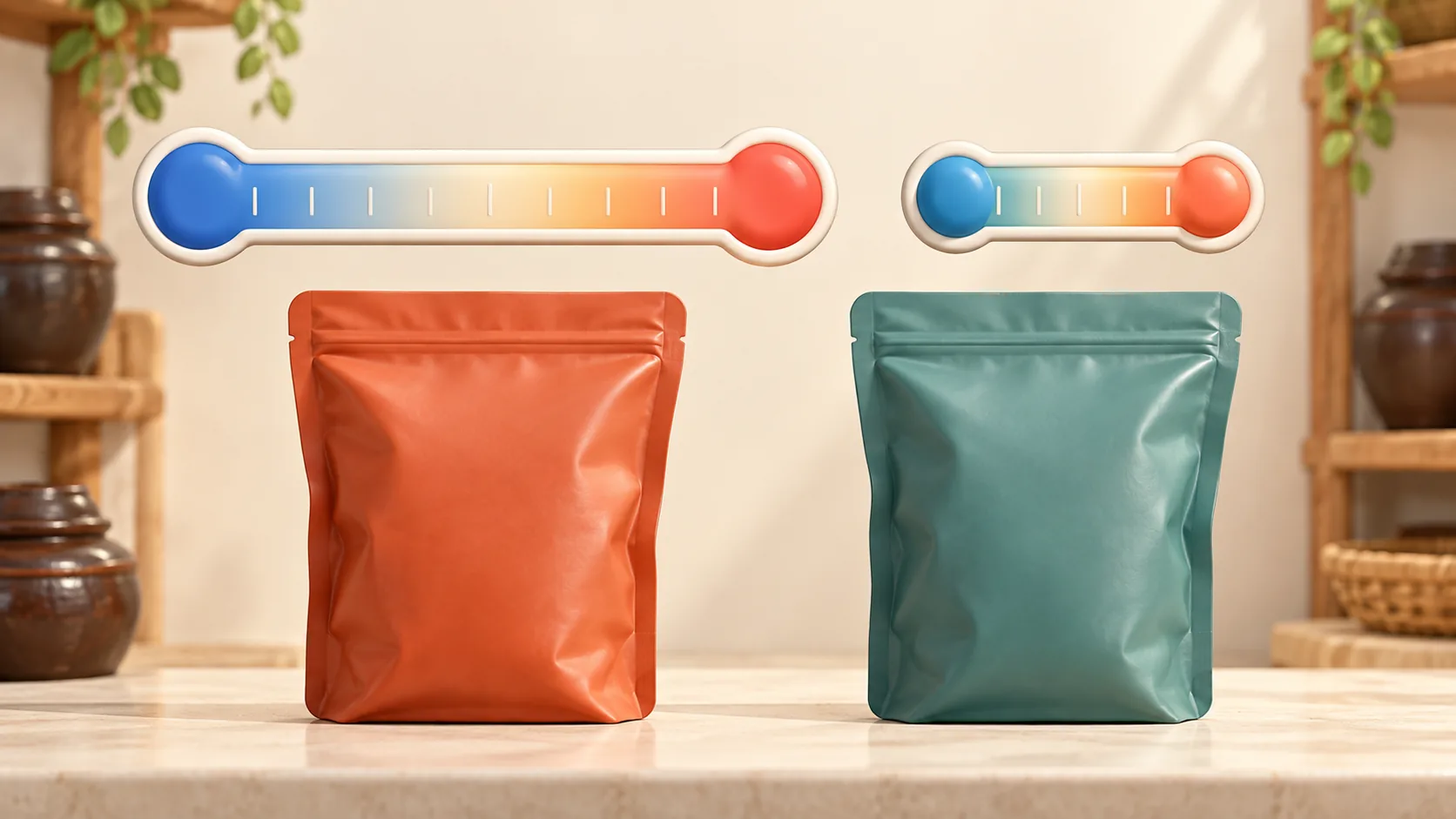
If a Korean package says silon bogwan (실온 보관, “room-temperature storage”), the regulatory range behind silon can be 1 to 35°C. A different word, sangon (상온, “ordinary temperature”), covers 15 to 25°C in Korea’s food rules. Both can emerge from a translation app as “room temperature,” but they aren’t interchangeable categories.
That difference changes how you read a package. It doesn’t mean that 35°C is a recommended target, or that every unopened food can sit in summer heat. It means the Korean term carries more information than the loose English gloss. Start with the printed storage condition, then look for a narrower temperature, a warning about sunlight, or a separate instruction for after opening.
The wider word is silon
The current Korean Food Code distinguishes products by storage and distribution temperature when a separate temperature hasn’t already been set. Its bands include 1 to 35°C for silon products, 15 to 25°C for sangon products, 0 to 10°C for refrigerated products, and -18°C or below for frozen products.
That order surprises English speakers because “ordinary temperature” sounds broader than “indoor temperature.” In the regulation, the opposite is true:
| Korean term | Literal cue | Regulatory range |
|---|---|---|
| silon (실온, “indoor temperature”) | the broader category | 1 to 35°C |
| sangon (상온, “ordinary temperature”) | the narrower category | 15 to 25°C |
The range is a category, not a weather forecast for your kitchen. A government FAQ based on Food and Drug Safety Ministry guidance says that “a cool place” isn’t separately defined. It says manufacturers or importers should provide a concrete temperature range so consumers get accurate information. The same FAQ notes that older Food Code wording was changed in 2016 to jiksa gwangseoneul pihan silon (직사광선을 피한 실온, “room temperature away from direct sunlight”).
So the number alone doesn’t erase the rest of the label. A pouch marked for room-temperature storage may also say to avoid direct sunlight or moisture. Another product may print a specific maximum. Those details narrow the practical instruction.
A bottled-water rule proves the words aren’t synonyms
The distinction isn’t just dictionary trivia. A July 30, 2026 government notice about bottled-water rules said that, from July 31, the storage temperature used when testing a request to extend a product’s shelf life would change from sangon, 15 to 25°C, to silon, 1 to 35°C. The ministry said the wider condition was intended to reflect actual distribution and storage environments.
That was a bottled-water testing change, not blanket advice for all food. Its value here is narrower: the government deliberately switched from one Korean term to the other and printed both ranges. If the words meant the same thing, that change would make no sense.
The same notice also addressed direct-sunlight exposure during bottled-water storage. That reinforces the useful reading habit: temperature category and surrounding conditions work together.
How to make the label useful
First, find the Korean word. If it says silon, don’t silently replace it with the narrower 15 to 25°C band associated with sangon. If it says sangon, don’t assume the broader 1 to 35°C band.
Second, keep reading the same storage line. “Away from direct sunlight,” a stated maximum temperature, or another specific condition is part of the instruction. The Food Code’s general category applies where a separate storage and distribution temperature hasn’t already been specified.
Third, treat gaebong hu (개봉 후, “after opening”) as a new decision point. An unopened product’s category doesn’t answer what to do after the seal is broken. If the package gives a separate after-opening direction, follow that direction rather than carrying the unopened rule forward.
This is one of those Korean details that translation smooths into uselessness. “Room temperature” looks familiar, so it invites a familiar assumption. The safer and more accurate move is to read one word further: silon or sangon?
Sources
- Government 110 FAQ on Korean food-storage temperature terms (checked October 1, 2026)
- Korean Food Code, current administrative rule (checked October 1, 2026)
- Ministry notice on revised bottled-water storage and shelf-life testing rules (checked October 1, 2026)